
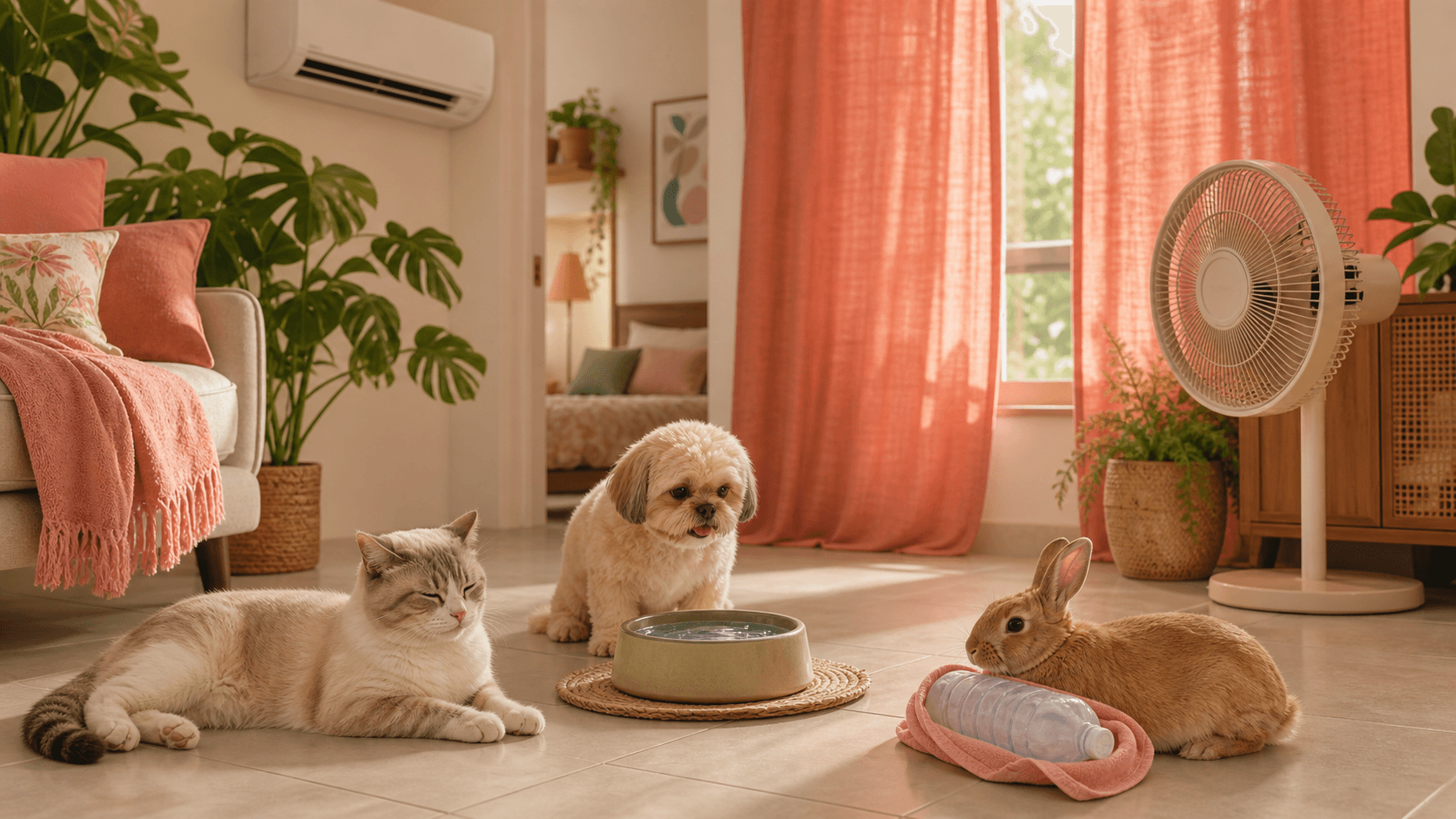
Your pet does not need an icebox home. Your pet needs choices: shade, water, airflow, a cooler resting spot, and air-conditioning when the room or the animal is not coping.
Singapore, Malaysia, and Indonesia homes share the same basic problem. Heat and humidity make it harder for dogs and cats to shed heat, especially in smaller indoor spaces. Use this to prepare for the vet conversation, not to diagnose your pet at home.
Start with the cooling hierarchy
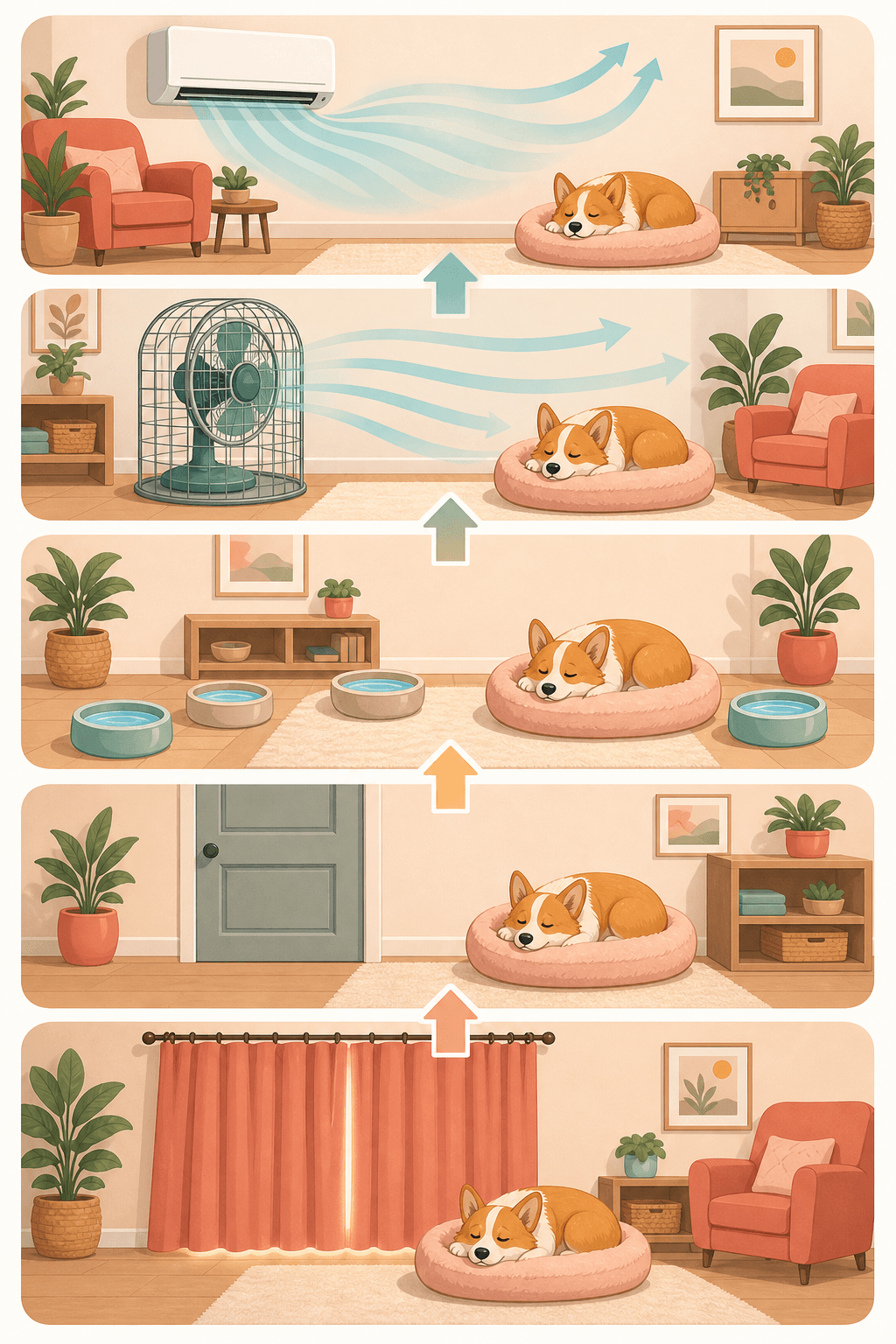
Start with the room before you start with the remote control.
Close curtains before the afternoon sun hits the floor. Shut doors to keep one room easier to cool. Put water in more than one place. Then add airflow. Then use air-conditioning for peak heat, high-risk pets, or rooms that stay warm even after basic changes.
This matters because the bill concern is real. One source cites a 2018 Singapore National Environment Agency study saying air-conditioning can account for up to 40% of the average household electricity bill for the average household (Coolzy SG). That does not mean “never use aircon”. It means use it with a plan.
Singapore’s Animal and Veterinary Service also treats fan-cooled and air-conditioned pet accommodation as distinct options at the Animal Quarantine Centre, which is a useful reminder: cooling is a comfort and welfare variable, not only a luxury setting (AVS).
| Cooling step | What to do at home | Why it helps |
|---|---|---|
| Shade | Close curtains before peak sun | Reduces heat entering the room |
| Room control | Close doors to focus cooling | Keeps one pet-safe area cooler |
| Water | Place multiple water bowls | Gives pets access without moving far |
| Airflow | Use fans where safe | Moves air, but does not cool the room |
| Aircon | Use for peak heat or high-risk pets | Creates a regulated indoor space |
Fans help, but they are not aircon
A fan is useful. It is not the same as air-conditioning.
Fans move air across the room. They do not make the room itself cooler, and they are less effective for dogs and cats than for humans because dogs and cats have fur and do not sweat through their skin the way people do (Advanced Heating & Cooling).
That does not make fans pointless. A fan can make a shaded room less stuffy. It can support ventilation. It can help when paired with water, curtains, and a cooler floor surface. The mistake is leaving a pet in a hot room and assuming a fan has solved the heat.
Placement matters. Avoid constant direct airflow into your pet’s face or resting spot. One pet-safety source warns that constant airflow may irritate sensitive airways, and that curious pets can injure paws or noses around moving fans or air-conditioning grilles (Petbook Magazine).
| Setup | Better choice | Avoid |
|---|---|---|
| Fan | Across the room, not blasting the pet | Direct airflow all day |
| Floor fan | Stable base, guarded blades | Unsupervised access to moving parts |
| Aircon vent | Cool the room generally | Cold air aimed at one bed |
| Cords | Tucked away or blocked | Dangling cords near chewing dogs |
Aircon is not automatically bad for pets
Air-conditioning itself is not the enemy. Poor setup is the problem.
A regulated, comfortable indoor temperature can benefit cats, dogs, rabbits, and other animals, especially short-muzzled breeds that overheat more quickly, such as bulldogs, pugs, and Persian cats (Cool You). The useful question is not “aircon or no aircon”. It is “can the pet move away from the cold air, drink water, and rest without being blasted by the vent?”
Dogs often show heat stress more visibly because panting is part of how they shed heat. Cats may be quieter about discomfort, so look at where they choose to rest. A cat that normally sleeps on a high shelf may move to tile or a shaded lower corner when the room is warm. A dog may leave a sunny balcony patch and lie near the bathroom floor.
Short-muzzled dogs and cats deserve extra caution. Their head and airway shape can make heat harder to manage. Senior pets, very young animals, and pets already unwell also need a lower threshold for active cooling, but the exact plan should be individual.
In Singapore housing, cooling plans also have to respect confined indoor living. AVS says cats and dogs must be securely kept within premises large enough to comfortably house them, and private non-HDB premises have a maximum of three cats or dogs, or a combination (AVS). In plain owner terms: if several animals share one flat room, give them enough space to choose different resting spots.
Rabbits need self-regulation, not only a colder room
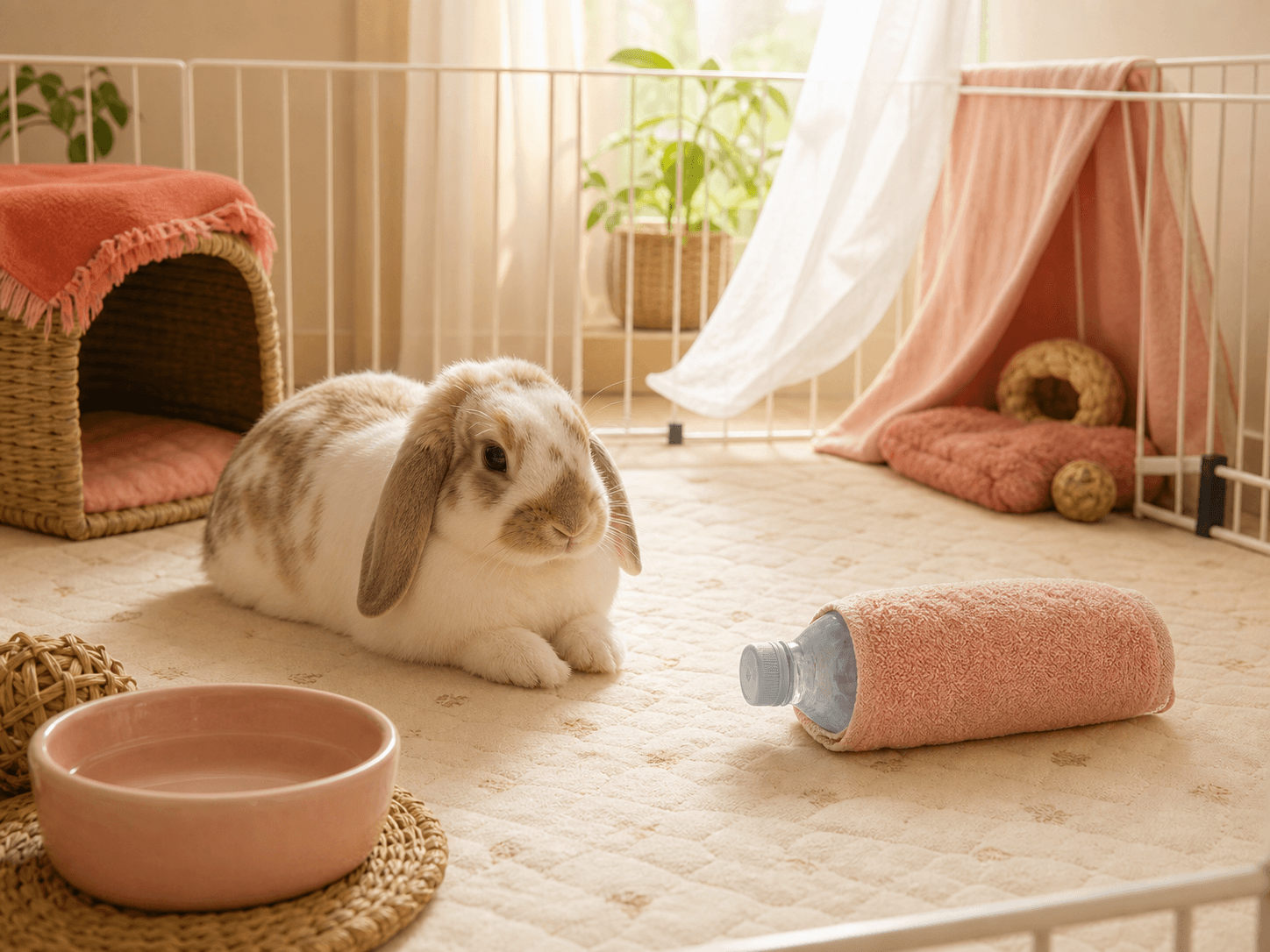
Rabbits are not small cats. Give them a way to choose cooler contact.
One practical option from the source bundle is a frozen water bottle placed where a rabbit or guinea pig can lie against it if they want to cool down (ABC News). Wrap it if needed so the surface is not harsh, and place it so the animal can move away.
For rabbits, the principle is choice. A cooler corner. Water. Shade. A frozen bottle. A fan or aircon that cools the area without trapping the rabbit in direct airflow. Do not rely on one whole-room setting as the only tool.
Dogs and cats also benefit from choice, but rabbits make the point most clearly. A pet-safe cooling plan is not about forcing cold onto the animal. It is about building a room where the animal can regulate better than it could in a hot, still space.
| Species | Cooling priority | Watch closely for |
|---|---|---|
| Dog | Water, shade, cooler floor, targeted aircon | Excessive panting, drooling, lethargy |
| Cat | Cool resting choices away from hot spots | Lethargy, heat-seeking changes, drooling |
| Rabbit | Frozen bottle option, shade, gentle room cooling | Poor coping in warm indoor spaces |
| Short-muzzled pets | Earlier active cooling | Faster overheating risk |
Know when cooling is not enough
Heat stress is not a vibes problem. Watch the animal, not only the weather.
The evidence bundle names excessive panting, drooling, lethargy, and, in severe cases, convulsions as warning signs of heat stress in dogs and cats in tropical conditions (Air-Con.com.sg). If those signs appear, move your pet to a cooler space, offer access to water if they can drink normally, and contact a vet for the next step.
Keep the triage simple.
| Situation | Owner action |
|---|---|
| Warm room, pet behaving normally | Shade, water, airflow, cooler resting spot |
| Panting or drooling more than usual | Move to a cooler room and monitor closely |
| Lethargy in heat | Call your vet for advice |
| Convulsions | Go for urgent veterinary care |
Do one small thing tonight: pick the room your pet would use during peak heat, then make it easier to cool before the next hot afternoon. Curtains closed. Water topped up. Fan placed safely. Aircon ready for the animal who needs more help.
— Manja