
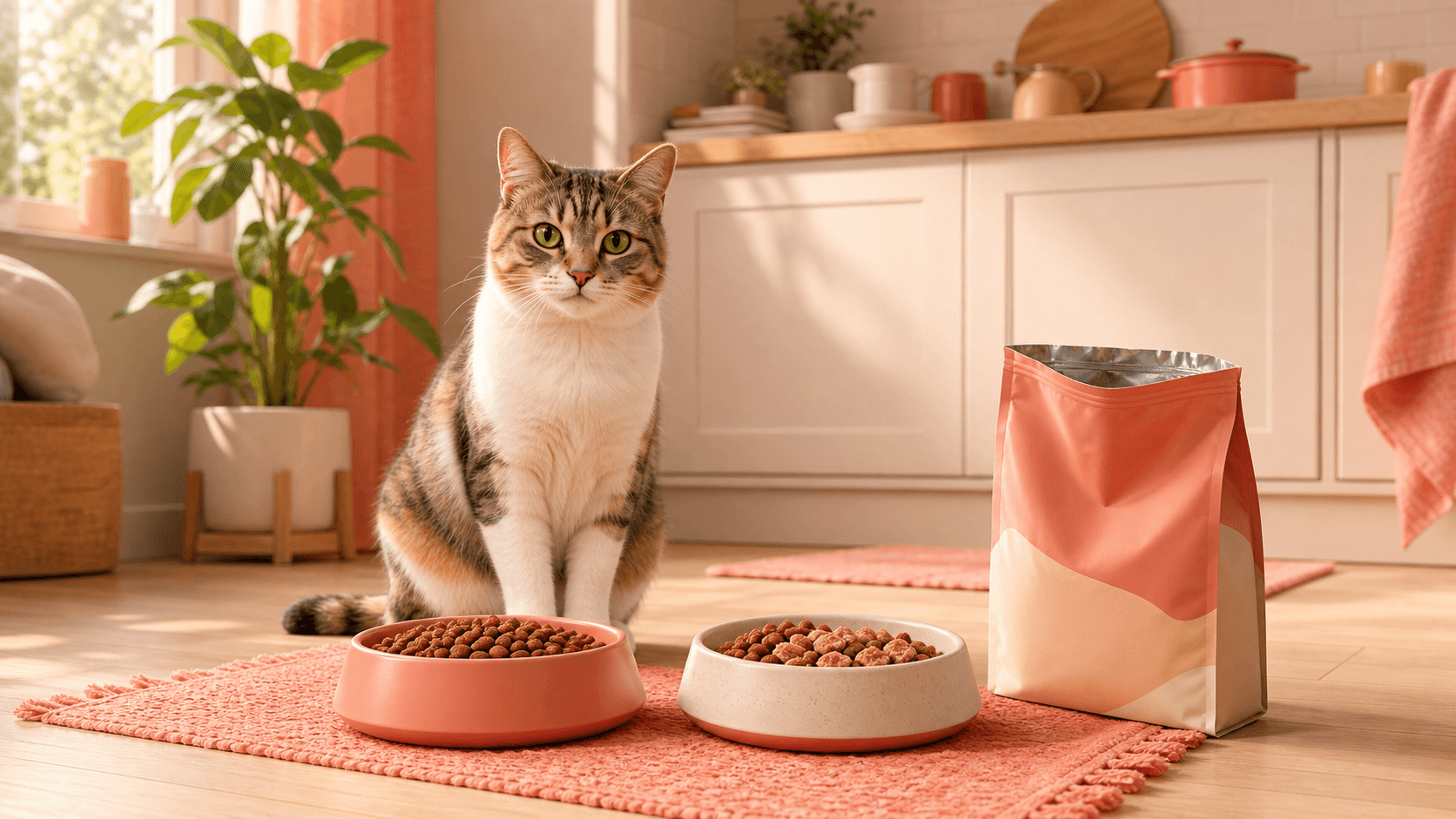
Change your cat’s food over about 7-10 days, and treat appetite loss as seriously as loose stool. Manja is editorial, so use this to prepare for the vet conversation, not to diagnose your cat at home.
Change one thing at a time
A healthy adult cat usually does better with a gradual food change than a sudden bowl swap. Mix the new food into the old food over about 7-10 days. Increase the new diet as your cat accepts it, and decrease the old diet at the same pace.

This sounds boring. It is also the point.
Cats can react to a fast switch with diarrhoea, vomiting, reduced appetite, or flat refusal. If the stool softens during the change, slow down or pause the transition. Do not keep increasing the new food because the schedule says so. The litter tray is feedback.
| Transition stage | What to do | What to watch |
|---|---|---|
| Start | Add a small amount of the new food to the current food | Normal appetite, normal stool |
| Middle | Increase the new food only if the cat is eating well | Soft stool, vomiting, hesitation |
| End | Move fully to the new food after about 7-10 days if tolerated | Refusal, watery diarrhoea, lethargy |
| If stool softens | Pause or slow the switch | Whether signs settle or worsen |
Do not add a new wet food, new dry food, new topper, and a supplement in the same week. If something goes wrong, you will not know which change caused it.
Compare the label before the bowl

Two foods can sound similar on the front of the bag and still differ where it matters. Check the label before you switch, especially if the new food was chosen because of a promo, marketplace stock issue, or a recommendation in a chat group.
Look for the intended species and life stage. A kitten food, adult maintenance food, and “all life stages” food are not the same thing. Check whether the food is complete and balanced for the life stage your cat is in. Then compare feeding directions, calorie density, protein and fat levels, and the major ingredient differences.
Marketing words are not enough. A label gives you the practical questions: Is this meant for cats? Is it meant for this cat’s life stage? How much does the maker say to feed? Does the nutrient profile look very different from the current food?
| Label item | Why it matters |
|---|---|
| Species | Cat food should be labelled for cats, not chosen from dog-food logic |
| Life stage | Kittens, adult cats, and some senior cats may need different nutritional adequacy |
| Complete-and-balanced status | This tells you whether the food is meant as a full diet |
| Feeding amount | The new food may not use the same serving amount as the old food |
| Calorie density | Similar-looking portions can deliver different energy |
| Protein, fat, major ingredients | Big differences may make the transition harder for some cats |
What changed (and why): older feeding advice often leaned on brand loyalty or front-label promises. Better switching advice starts with nutritional adequacy and manufacturer information, then looks at whether the cat actually tolerates the change.
Do not let a cat wait it out
A dog that skips a meal is not the same problem as a cat that stops eating. Cats are more vulnerable than dogs to problems from prolonged poor intake. Overweight cats and cats already unwell need extra caution because significant appetite loss can lead to fatty liver disease.
That means refusal is not a training issue. It is not a battle of wills. If the new food makes your cat stop eating, step back. Offer the tolerated food again if that is available, and seek veterinary input sooner for overweight cats, unwell cats, kittens, and senior cats.
Mild soft stool during a transition can mean the switch is moving too quickly. Bloody diarrhoea, repeated watery diarrhoea, vomiting, lethargy, dehydration signs, refusal to eat, or diarrhoea in a kitten, senior cat, or already unwell cat is different. Treat those as medical signs.
| Sign during the switch | Sensible action |
|---|---|
| Mild soft stool | Slow or pause the transition |
| Food refusal | Do not force the new food or wait it out |
| Vomiting with diarrhoea | Treat as more than a normal switch reaction |
| Bloody or repeated watery diarrhoea | Arrange medical care |
| Lethargy or dehydration signs | Arrange medical care |
| Kitten, senior, or unwell cat with diarrhoea | Get help sooner than for a healthy adult cat |
Hydration helps, but it is not treatment
Wet food and fresh water can support hydration during a food change. That matters in hot, humid homes where water intake can become more important day to day.
Still, hydration support is not a diarrhoea treatment. Canned food has more moisture than dry food, but switching to wet food at the same time as changing the main diet can add another variable. If your cat already tolerates wet food, it may be useful as part of the routine. If wet food is new, introduce it carefully instead of piling changes together.
Dehydration in cats can become serious. If your cat has diarrhoea plus signs of dehydration, vomiting, weakness, or poor appetite, do not treat water bowls as the whole plan.
Supplements need the same discipline. Probiotic effects are product-specific, strain-specific, and context-specific. A broad claim that a supplement prevents or treats diarrhoea during a food switch needs stronger evidence than a nice label. Keep probiotics as a vet-discussion option, not a default add-on.
What your vet will ask
- What food was your cat eating before the switch?
- What new food did you introduce, and how quickly?
- Is your cat still eating the old food, the new food, or nothing?
- What does the stool look like: soft, watery, bloody, or repeated?
- Is there vomiting, lethargy, dehydration, or weight concern?
- Is your cat a kitten, senior, overweight, or already managing chronic disease?
Tonight’s small thing: put the old and new food labels side by side, then write down what changed and what your cat’s stool did after the first mixed meals. That note is more useful than a guess.
— Manja