
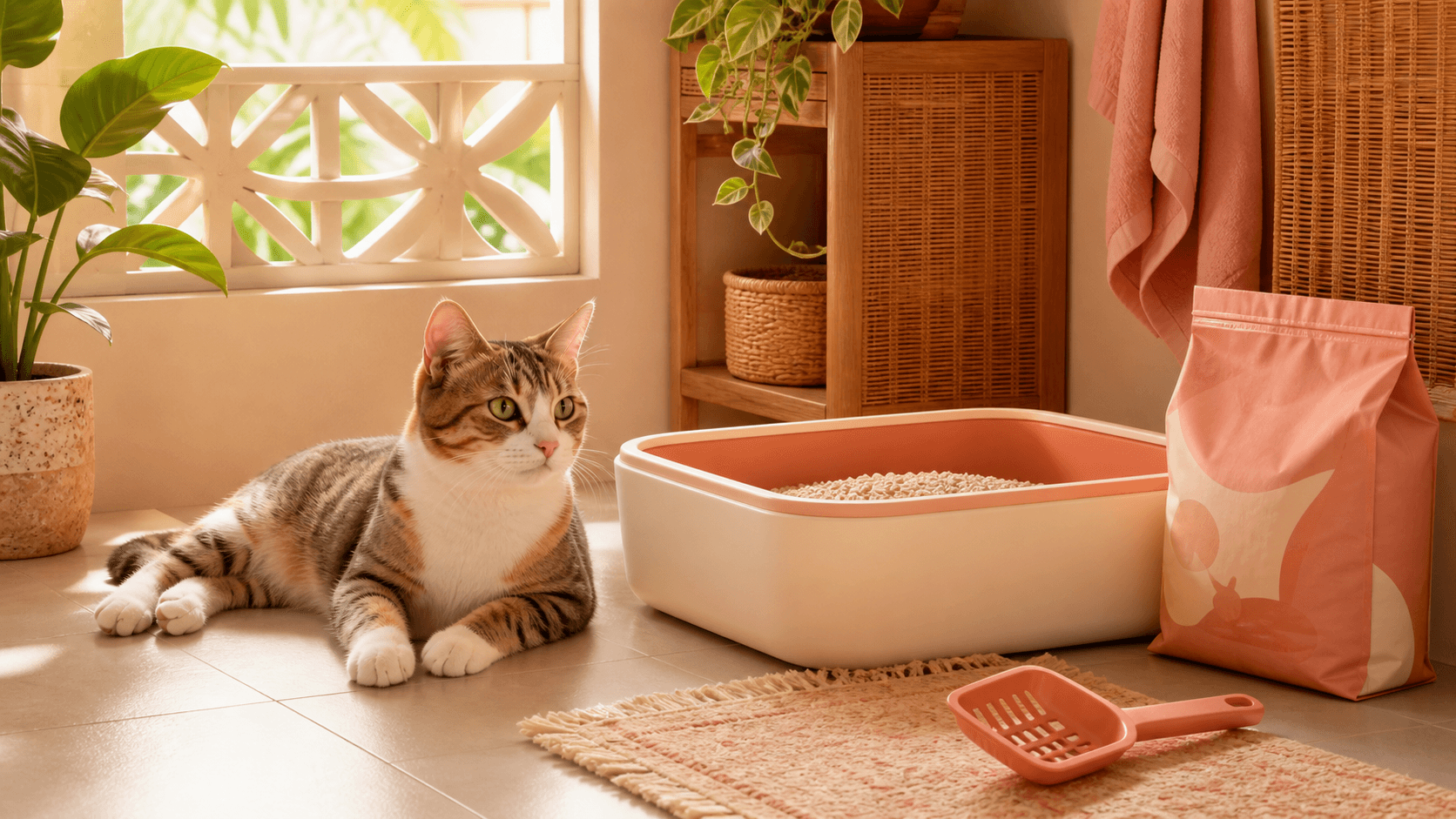
A cat who refuses the litter box is often objecting to the box, the litter, the smell, the location, or pain. In a humid flat, start with the litter your cat will reliably use, then keep moisture and odour from winning the week.
Cleanliness beats perfume
Cats are not being dramatic when they avoid a dirty tray. The box is a core resource, and odour, soiling, poor placement, and disliked substrate can all push a cat to toilet elsewhere, according to the Indoor Pet Initiative and International Cat Care.
The first move is not heavy fragrance. It is waste removal. Scoop urine and faeces frequently, then empty and wash the tray periodically so old smell does not sit in the plastic even after the clumps are gone. That separation matters: scooping handles the day’s mess; full washing resets the box.
Manja is editorial, not a clinic, so use this guide to improve the setup and ask your vet when the pattern looks medical or sudden.
| Owner problem | First thing to check | Why it matters |
|---|---|---|
| Strong smell | Waste sitting too long | Cats avoid boxes linked with odour or soiling |
| Cat steps in, then leaves | Litter texture or scent | Substrate preference affects box use |
| Cat uses one box only | Location and access | Social pressure can affect toileting |
| Smell returns after scooping | Tray needs emptying and washing | Odour can build beyond visible clumps |
Humidity changes the job

Singapore is warm and humid through the year, with high relative humidity and abundant rainfall, according to the Meteorological Service Singapore. Malaysia is also officially described as hot and humid by the Malaysian Meteorological Department. Indonesia’s meteorological agency describes tropical climate conditions across the archipelago through BMKG climate information.
That climate does not mean every home needs the same litter. It means owners should treat moisture as part of hygiene. A tray in a poorly ventilated service yard, bathroom, or enclosed cabinet may smell stronger. Plant-based or paper litters may show damp clumping, odour breakthrough, insects, or mould-like changes before the cat openly rejects the box.
Dense housing adds another layer. In Singapore HDB flats, pet keeping is framed as a shared living responsibility, including avoiding nuisance to neighbours, in HDB’s pet guidance. Odour control is not only about a fresher room. It protects the cat’s routine and keeps the peace in close living.
| Humid-flat setup | Watch for | Better owner move |
|---|---|---|
| Bathroom tray | Trapped damp air | Improve ventilation or move the tray |
| Enclosed cabinet | Smell held near the box | Use only if the cat still accepts it |
| Service yard | Stronger odour after rain or washing | Replace litter before it becomes unpleasant |
| Plant or paper litter | Dampness, insects, mould-like change | Empty and refresh earlier |
Pick litter by acceptance, not packaging
Clay, silica, tofu, corn, paper, and wood litters all involve trade-offs. Clumping strength, dust, tracking, odour control, flushability claims, biodegradability, cost, and cat acceptance all matter more than a nice bag or a strong scent.
A good starting point for many cats is unscented, low-dust clumping litter. The reason is plain. Added fragrance may please humans while making the tray less acceptable to scent-sensitive cats. The ASPCA links litter box avoidance to litter type, cleanliness, location, and stressors in its litter box problems guidance. Cornell’s feline health guidance also treats substrate, hygiene, and medical rule-outs as important parts of house soiling.
Covered boxes are not automatically wrong. Some cats use them well. But a covered box can trap odour and humidity, and some cats dislike that enclosed smell. The cat’s preference should outrank the owner’s wish to hide the tray.
| Litter or box choice | Possible upside | Main caution |
|---|---|---|
| Unscented clumping litter | Easier waste removal | Still needs tray washing |
| Scented litter | Smells nicer to humans | May put scent-sensitive cats off |
| Covered box | Hides the tray visually | Can trap odour and humidity |
| Plant, paper, or wood litter | May suit some owner priorities | Watch dampness and cat acceptance |
| Silica or clay litter | May suit some homes | Weigh dust, tracking, and preference |
Give each cat enough access

The practical baseline is one litter box per cat plus one extra, placed in separate accessible areas rather than clustered together. That is the setup logic behind the AAHA/AAFP feline environmental needs guidance: cats need multiple, separated resources to reduce conflict and stress, including litter boxes, as described by AAHA.
Separate means separate enough that one confident cat cannot guard the whole toilet system. Three trays lined up in one bathroom may look like three trays to a human, but to a nervous cat it can still feel like one contested place.
Location should be boring in the best way. Easy to reach. Not trapped behind a loud appliance. Not so hidden that the owner forgets to clean it. Not so exposed that a cat gets ambushed on the way out.
When changing litter, go slowly where possible. Mix a small amount of the new litter into the old litter, then increase it over time. Blue Cross advises careful changes around feline litter and trays because sudden shifts in texture or scent can disrupt use in its cat litter and litter trays guidance.
What changed and why
Older advice often treated litter as a housekeeping choice: buy the one that controls smell best, hide the tray, and clean when it looks bad. The better frame is cat-first. Choose the tray and substrate the cat will use, then build the hygiene routine around the home’s climate.
That shift matters in SG/MY/ID flats because humidity can make a “clean enough” box turn unpleasant faster. It also matters because avoidance may not be behaviour at all. If a cat suddenly urinates outside the box, strains, vocalises, passes small amounts, or has blood in the urine, do not treat it as a litter preference problem only. Feline lower urinary tract problems can cause those signs, and the AVMA advises veterinary care in its guide to lower urinary tract problems in cats.
For this week, do one small thing. Look at the tray from your cat’s point of view: smell, access, litter feel, and escape route. Fix the weakest point first.
— Manja