
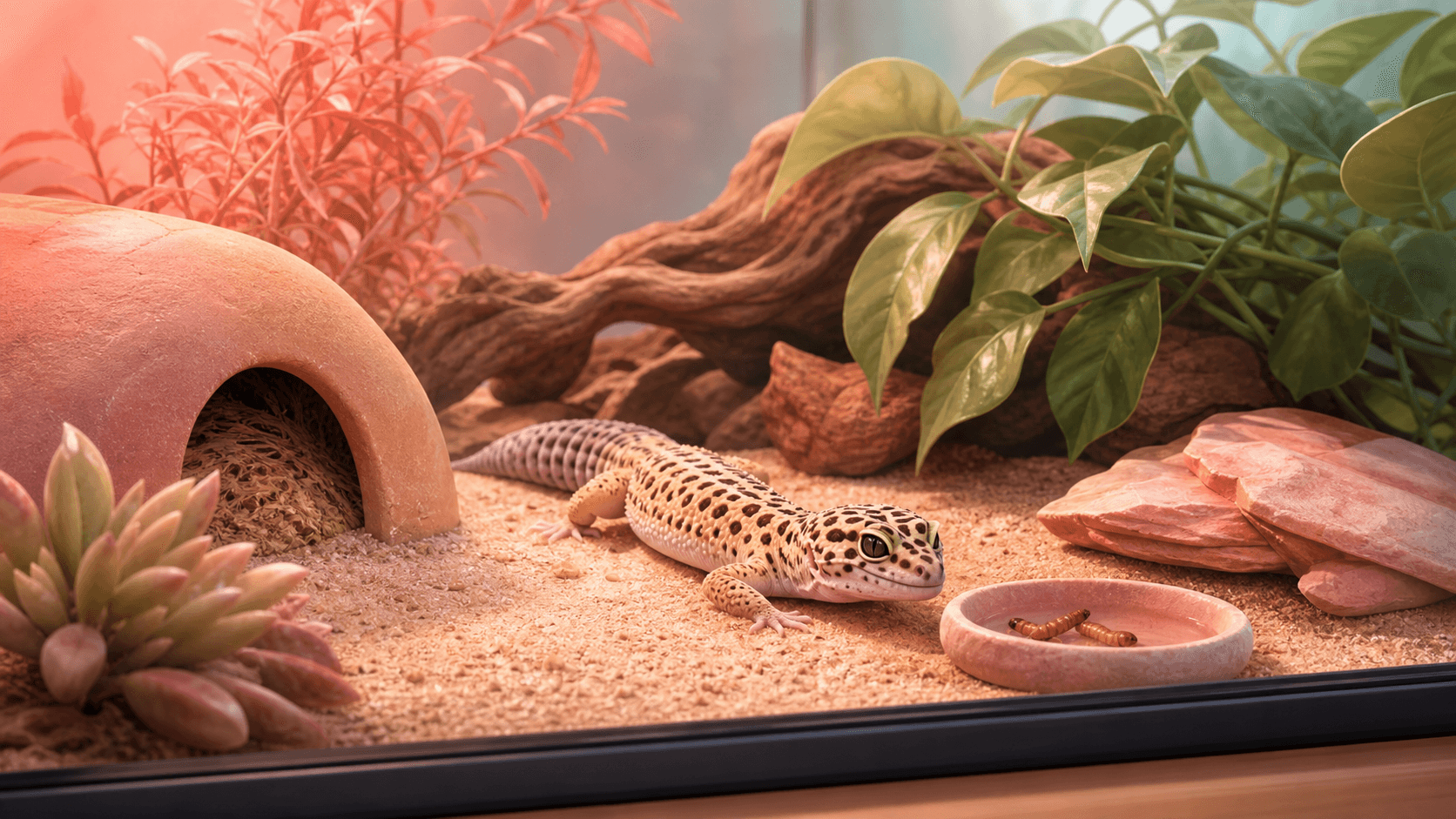
A gecko that skips food during shed may be fine, but a gecko that keeps refusing food needs a husbandry check before everyone blames “fussy eating”.
Use this to prepare for the vet conversation, not to diagnose your gecko at home. Appetite, heat, humidity, shedding, and diet sit together for reptiles. One weak link can make the whole routine look wrong.
Short food refusal can happen around shed
A brief appetite dip around shedding can be normal for geckos. The problem is when “brief” becomes a pattern, or when poor appetite appears with weight loss, lethargy, abnormal shed, mouth changes, or skin changes.
Do not wait for a gecko to “get hungry enough”. Reptile illness can look quiet. Anorexia, lethargy, weight loss, abnormal shedding, oral changes, and skin changes are all recognised warning signs in reptiles.
Start with observation. Write down when your gecko last ate, what it ate, whether it shed cleanly, and whether its activity changed. That short log helps separate a shed-related wobble from a husbandry or health problem.
| What you see | More likely shed-related | Treat as a warning sign |
|---|---|---|
| Missed meal | Happens close to shedding, then appetite returns | Refusal continues beyond the shed |
| Body condition | Looks stable | Weight loss or visible thinning |
| Activity | Still alert in its usual hiding spots | Lethargy or weakness |
| Shed | Comes off cleanly | Retained shed on toes, tail tip, eyes, or mouth |
| Mouth and skin | Looks normal | Mouth changes, swelling, skin changes |
Heat drives appetite and digestion

A gecko cannot digest normally if the enclosure temperature is wrong. Reptiles depend on suitable environmental temperatures for metabolism, digestion, immune function, and feeding behaviour.
This matters in air-conditioned homes. A room may feel comfortable to you while the enclosure’s warm side is too cool for your gecko. Do not rely on the room thermostat or your hand against the glass. Measure the warm side, cool side, and night temperature with reliable thermometers.
A proper gradient lets the gecko choose. It needs a warmer basking area and a cooler zone, checked with accurate equipment. If the whole enclosure sits at one temperature, your gecko loses that choice.
| Checkpoint | Owner action | Why it matters |
|---|---|---|
| Warm side | Measure with a reliable thermometer | Supports normal metabolism and digestion |
| Cool side | Measure separately from the warm side | Lets the gecko move away from heat |
| Night temperature | Check after lights and room routines change | Air-conditioning can change enclosure conditions |
| Equipment | Use accurate measuring equipment | Guessing room climate misses enclosure-level problems |
If appetite dropped after a new air-conditioner schedule, a moved enclosure, or a changed heat source, treat temperature as the first suspect. Small thing, done daily: check the actual enclosure readings before offering more food.
Humidity problems show up on the skin first

Shedding is not only a skin event. It is also a husbandry check. Humidity and access to a humid hide affect shed quality, and retained shed can become a welfare and health problem.
Watch the toes, tail tip, eyes, and area around the mouth. Shed stuck in those places is not cosmetic. Retained shed on toes or tail tip can tighten around delicate tissue. Retained shed near the eyes or mouth can interfere with normal behaviour and may need veterinary care.
A humid hide gives the gecko a place to use moisture when it needs it. That does not replace overall enclosure control. It is one part of the setup, alongside heat, diet, and monitoring.
| Shed finding | What it suggests | Next step |
|---|---|---|
| Clean full shed | Current setup may be working | Keep monitoring appetite and behaviour |
| Retained shed on toes | Humidity or shed support may be inadequate | Review humid hide and enclosure conditions |
| Retained shed on tail tip | Possible welfare risk | Review husbandry and seek help if severe |
| Retained shed near eyes | Health concern | Arrange reptile-experienced assessment |
| Retained shed around mouth | Health concern | Arrange reptile-experienced assessment |
What changed here is the advice. Older owner chat often treated stuck shed as a small grooming issue. Better reptile care treats abnormal shedding as a husbandry signal, and sometimes a medical one.
Food must match the species
“Gecko food” is not one diet. Feeder prey should be species-appropriate, correctly sized, and nutritionally prepared.
Insectivorous geckos, including leopard geckos, generally need suitable insects, gut loading, and calcium and vitamin supplementation. Gut loading means the feeder insects are fed properly before being offered, so they are not empty calories in a crunchy jacket.
Some species, such as crested geckos, commonly eat formulated complete diets plus insects. That is a different routine from an insect-only plan. If the species is different, the diet may be different too.
Calcium and vitamin D3 deserve caution. Under-supplementation can contribute to metabolic bone disease. Excessive or inappropriate supplementation may also be harmful. The right routine depends on species, diet, UVB, age, and reproductive status.
Do not copy a powder schedule from another keeper without checking the setup behind it. A young growing gecko, an adult gecko, a breeding female, and a gecko under different UVB conditions may not have the same needs.
Red flags are not nutrition-only problems
Some signs should move the issue out of “maybe it dislikes this insect” territory.
Mouth changes, visible swelling, weakness, tremors, difficulty walking, severe retained shed, dehydration signs, or repeated regurgitation need reptile-experienced veterinary assessment. These signs can point beyond appetite and into disease, pain, dehydration, oral disease, or metabolic bone disease.
Metabolic bone disease is linked to calcium, phosphorus, vitamin D3, UVB exposure, diet, and husbandry. It can cause weakness, skeletal changes, tremors, and fractures. That is why calcium advice should not be casual.
What your vet will ask
- What species is your gecko?
- When did it last eat, and what feeder or diet was offered?
- Did the appetite change happen around shedding?
- Are the warm side, cool side, and night temperatures measured with reliable thermometers?
- Does it have a humid hide, and did the last shed come off cleanly?
- What calcium, vitamin, UVB, and diet routine are you using?
Tonight, check the enclosure readings, inspect the toes and tail tip for retained shed, and write down the last confirmed meal. If appetite does not return, or if you see weakness, weight loss, mouth changes, swelling, severe retained shed, dehydration signs, or repeated regurgitation, book a reptile-experienced assessment.
— Manja