
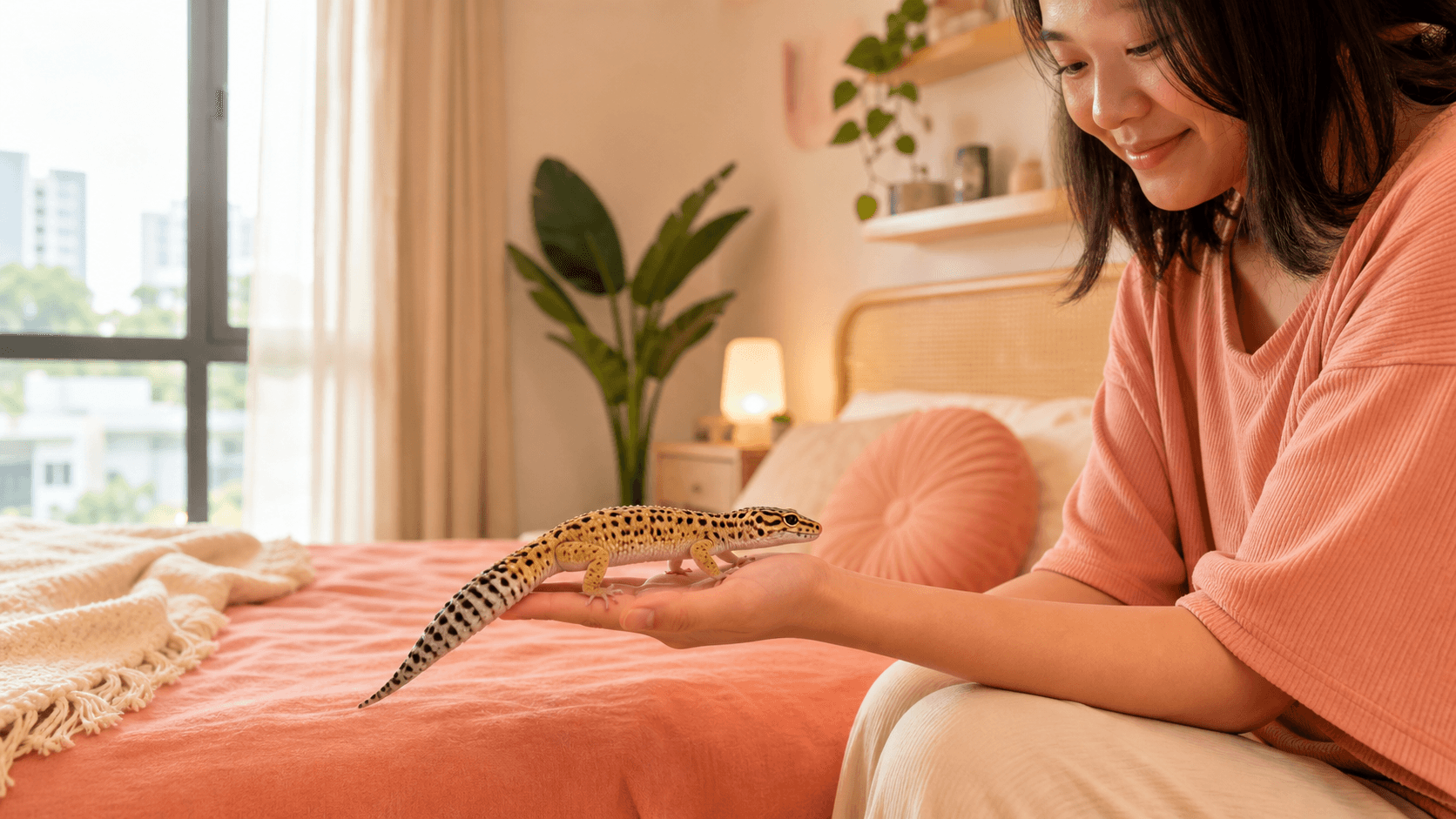
A leopard gecko’s tail is not a handle, not a toy, and not something to test when the gecko panics.
That sounds obvious until a small gecko bolts across a sofa and someone grabs the nearest moving part. Tail drop is a real defence response in lizards, and leopard geckos may do it when badly startled, restrained, grabbed, pulled, or pinched by the tail. Use this guide to make handling calmer at home, not to diagnose injury or replace an exotics-vet visit when something looks wrong.
Start low, slow, and from below
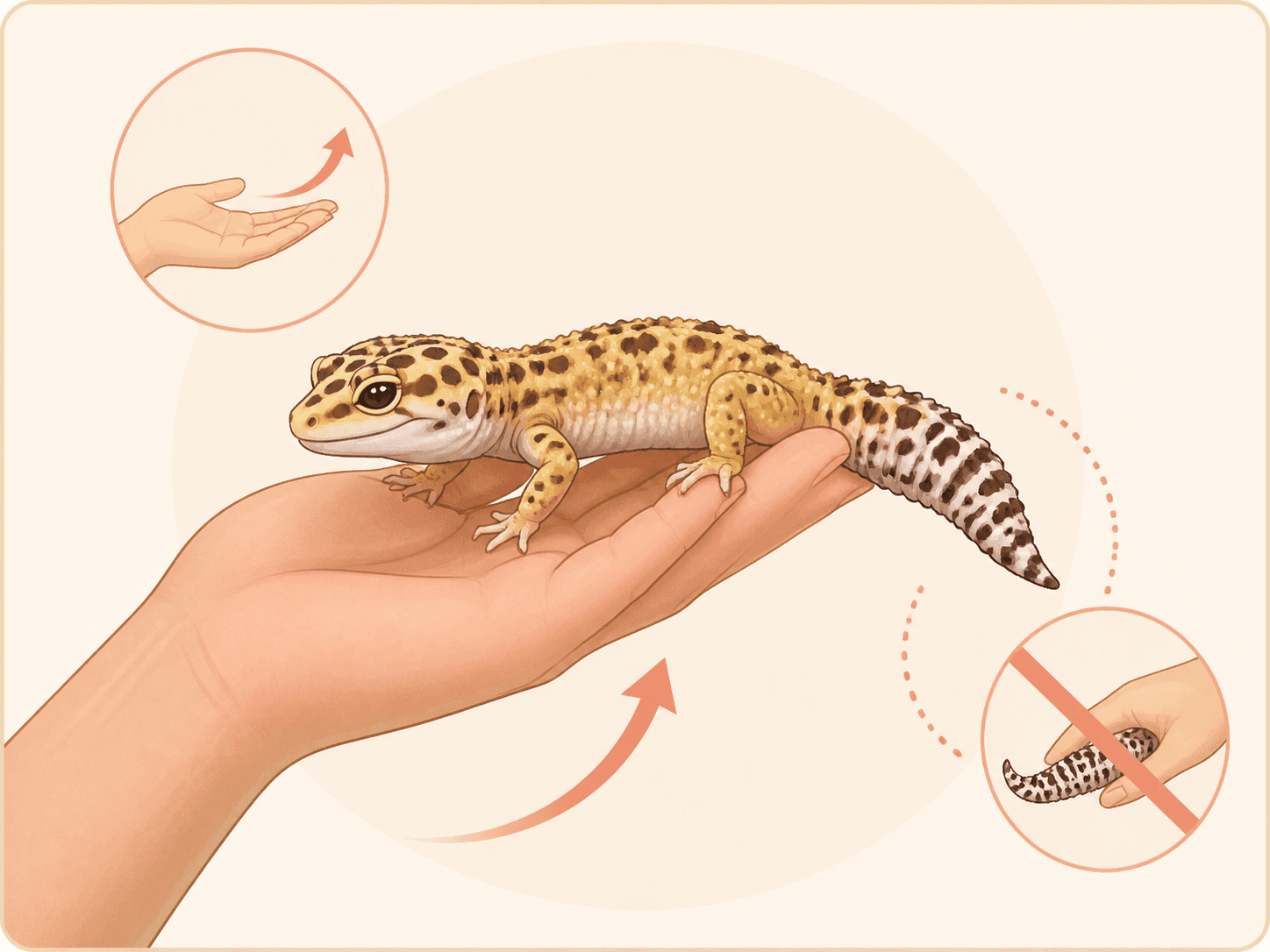
A calm handling session starts before your hand touches the gecko.
Open the enclosure without hovering over the animal like a bird. A hand from above can feel threatening. Instead, keep your hand low and steady, then let the gecko walk onto it or gently scoop from below. The RSPCA leopard gecko care guidance and reptile care sheets both emphasise gentle handling and stress reduction, which is the whole point here.
Keep the first sessions close to a safe surface. Leopard geckos can suddenly run or jump, and a fall can injure the animal even if the tail stays attached. A sofa, bed, low table with clear edges blocked by your forearm, or the floor of a closed room is safer than standing with the gecko at chest height.
Do not chase the gecko around the enclosure. Chasing teaches the gecko that hands mean panic. If it backs away, freezes hard, or tries to sprint, stop and try again later.
| Handling move | Better choice |
|---|---|
| Grabbing from above | Offer a low hand or scoop from below |
| Holding the tail | Support the body and leave the tail free |
| Standing while handling | Sit near a safe surface |
| Chasing around the tank | Pause and let the gecko settle |
| Passing between many hands | Keep handling calm and predictable |
The tail is a warning system, not decoration
Leopard geckos can drop their tails as a defence mechanism. Merck describes tail autotomy in lizards as a defensive response, and notes that tails may regrow after loss in some lizards (Merck Veterinary Manual). VCA also warns that leopard geckos may drop their tails if frightened or handled roughly (VCA Animal Hospitals).
The practical rule is simple. Never pin the tail. Never pull the tail. Never use the tail to stop a moving gecko.
This matters because the tail is more than cosmetic. Leopard geckos store fat in the tail, so losing it removes a reserve the animal uses as part of normal body condition. After tail loss, owners should watch appetite, hydration, and body condition while the tail regrows, because the gecko has lost a storage site, not a decorative stripe.
A dropped tail may twitch after separation. Do not try to reattach it. PetMD’s tail-drop guidance is direct on this point: the tail cannot be reattached, and aftercare should focus on cleanliness, low stress, monitoring, and veterinary attention if complications appear (PetMD).
What changed and why
Older reptile advice often treated handleable lizards as beginner-proof pets. That misses the small details that prevent stress.
The better advice is narrower. Leopard geckos can be handled, but only when the owner respects how small, fast, and stress-sensitive they are. “Gentle” is not a vibe. It is a handling method: low hand, supported body, free tail, secure room, short session, calm return to the enclosure.
| Old habit | What we recommend now | Why it matters |
|---|---|---|
| Pick up the gecko when you want | Let it step on or scoop gently | Reduces grabbing and struggle |
| Hold firmly so it cannot escape | Support without squeezing | Restraint can increase panic |
| Let children play with it | Supervise closely | Squeezing and chasing raise stress |
| Handle anywhere indoors | Secure the room first | Prevents falls, escapes, and heat stress |
Children need a different standard. A leopard gecko is not a casual play pet. PDSA frames reptiles as specialist pets that need appropriate care and handling (PDSA). For children, that means an adult stays close, the gecko stays low, and the child does not restrain the animal when it moves.
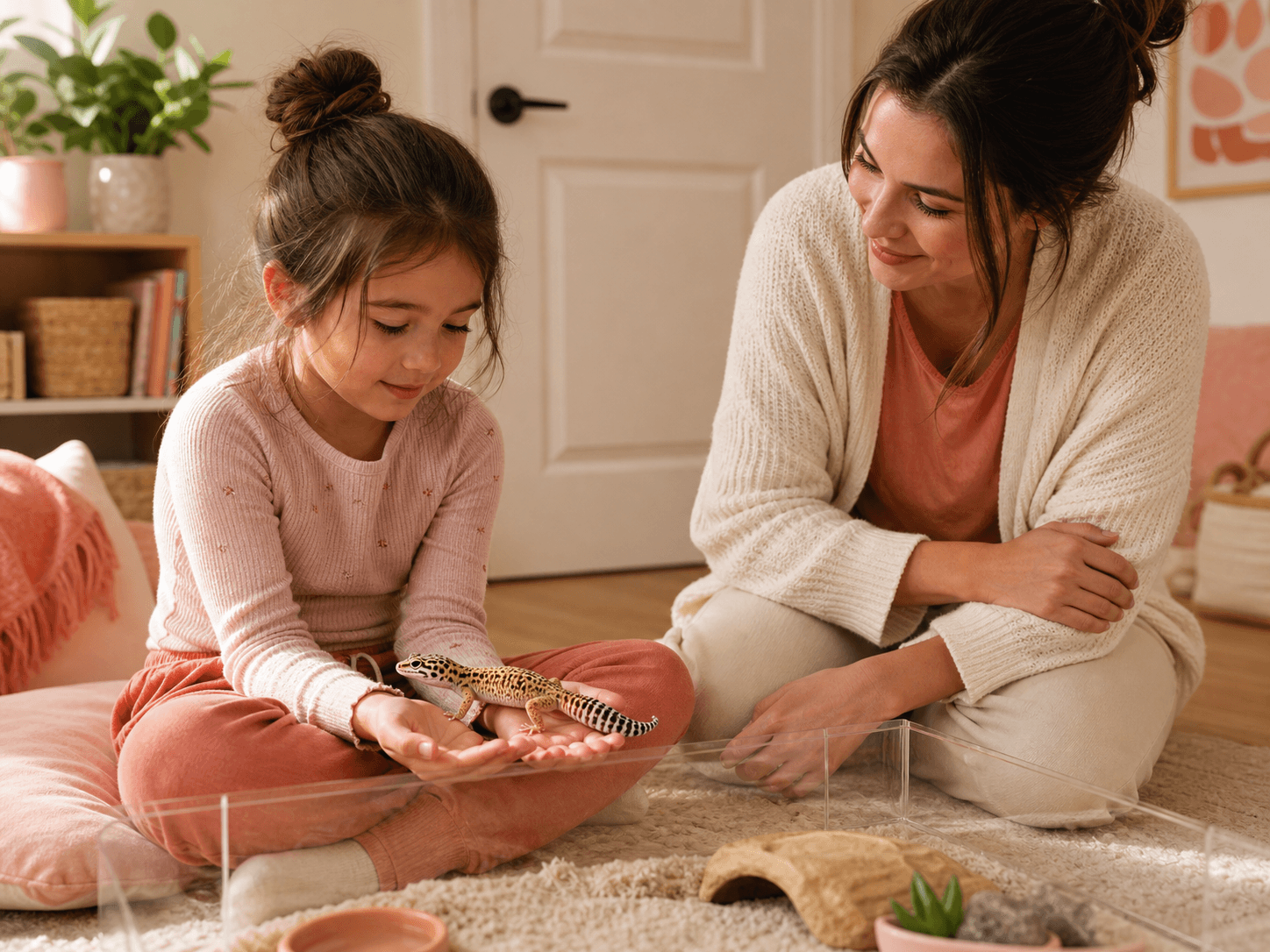
A useful house rule: the gecko can walk over hands, but the child cannot chase the gecko.
Secure the room before the gecko comes out
Singapore, Malaysia, and Indonesia homes add a practical layer to handling. Warm, humid conditions are normal across the region. Singapore’s official climate page describes the country as warm and humid throughout the year (Meteorological Service Singapore). Malaysia’s meteorological authority describes a hot and humid equatorial climate (Malaysian Meteorological Department). Indonesia’s climate agency covers a tropical archipelago context (BMKG).
That does not mean your leopard gecko should be handled outdoors, on a balcony, or beside an open window. Keep handling indoors, controlled, and away from direct sun, hot surfaces, drains, floor gaps, and cluttered spaces. A gecko that overheats or panics is more likely to bolt, struggle, or be grabbed badly.
| Before handling | Check this |
|---|---|
| Windows and balcony doors | Closed or blocked |
| Room door | Closed |
| Drains and floor gaps | Covered or avoided |
| Cluttered floor | Cleared |
| Direct sun and hot surfaces | Avoided |
| Other pets and small children | Kept away unless supervised |
Small urban homes can actually help if you prepare the space. A closed bedroom with a clear bed or floor area is easier to control than a living room with open doors, bags, cables, and furniture gaps.
If the tail drops, reduce stress first
If the tail drops, do not punish the gecko, panic-handle it, or keep inspecting the stump every few minutes. Return the gecko to a clean, low-stress enclosure. Keep the environment calm. Watch for bleeding, swelling, discharge, appetite changes, or lethargy. Reptile wound guidance from MSD highlights infection and wound-management concerns in reptiles, which supports getting veterinary help when abnormal signs appear (MSD Veterinary Manual).
Use a simple action ladder.
| Situation | Owner action |
|---|---|
| Tail dropped, gecko alert, no obvious complication | Return to clean enclosure and monitor |
| Bleeding, swelling, discharge, appetite change, or lethargy | Contact an exotics veterinarian |
| Someone wants to reattach the tail | Do not try; it cannot be reattached |
| Child caused the tail drop | Pause child handling and rebuild supervision rules |
The next handling goal is not “get back to normal fast.” It is trust. Let the gecko settle. Rebuild with low, quiet sessions and no tail contact.
Tonight’s small thing: before the next handling attempt, close the room, sit down, offer a low hand, and promise the tail stays free.
— Manja