
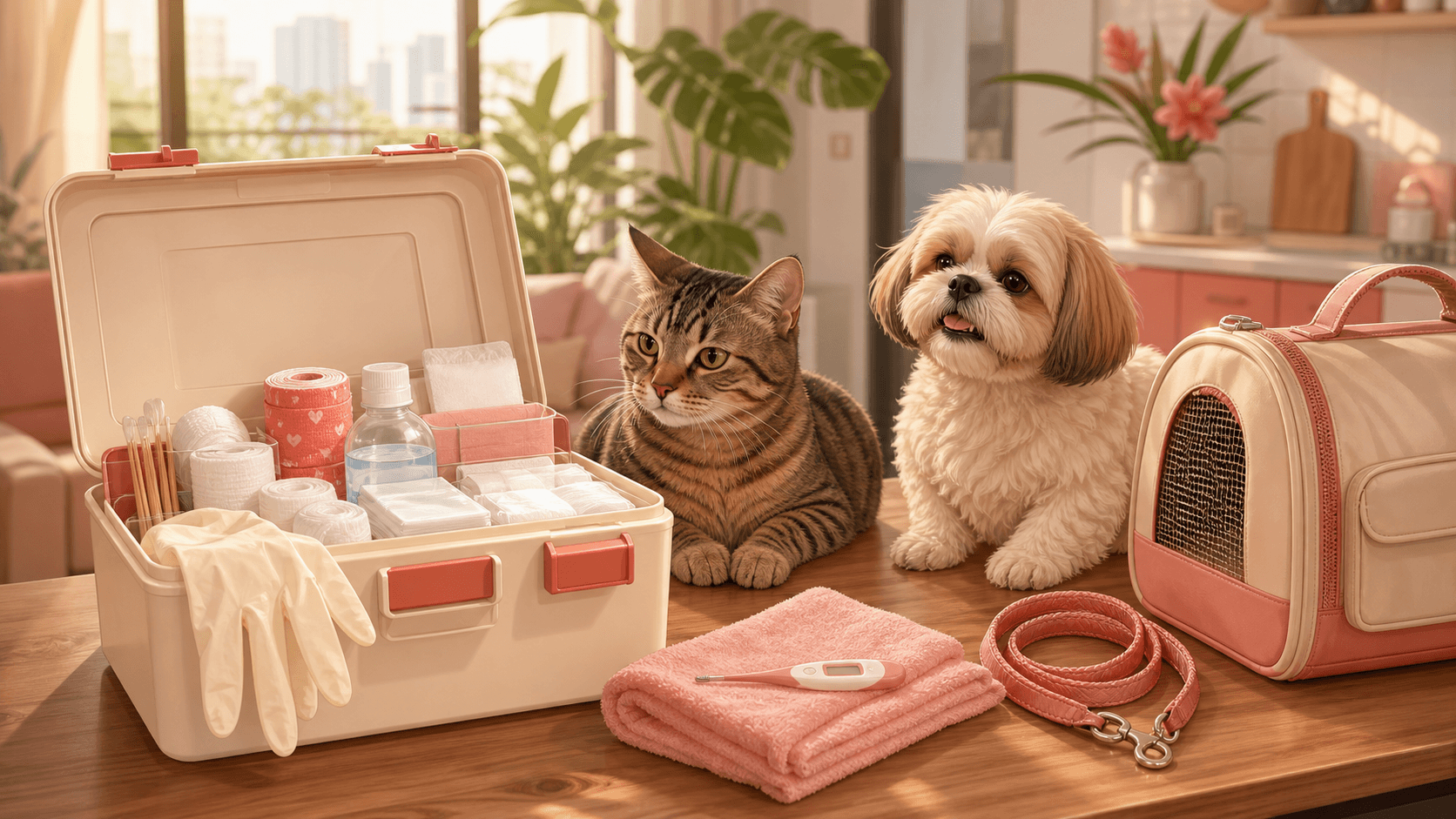
A first-aid kit buys your cat or dog safer minutes before the vet, not a home diagnosis.
Use this to stabilise, call, and transport. Not to test whether a bite wound is "really serious", or whether Milo the Shih Tzu can sleep off heat stress after a lift delay. Manja is editorial, so use this to prepare for the vet conversation, not to diagnose your pet at home.
Build the kit around stabilising and moving
First aid is temporary care until veterinary treatment is available. That is the line to keep. The AVMA first-aid guidance frames pet first aid as immediate support before professional care, and AAHA also keeps the focus on supplies plus veterinary guidance.
Your home kit should be one sealed, dry, easy-to-grab box. Not a drawer with half a roll of tape, one expired saline bottle, and a thermometer nobody can find.
| Stock this | Why it belongs |
|---|---|
| Sterile gauze and non-stick bandages | Cover wounds and apply pressure |
| Adhesive tape | Hold dressings in place |
| Blunt-ended scissors | Cut bandage material safely |
| Tweezers | Remove visible small debris when appropriate |
| Disposable gloves | Protect you and reduce mess |
| Saline or clean water | Flush dirt from the surface |
| Digital thermometer | Check temperature before calling the clinic |
| Towels | Restraint, cooling, warmth, and transport support |
| Emergency contacts | Fast call, fast route, less panic |
The ASPCA first-aid kit list and PDSA kit guidance both point to practical basics: gauze, tape, scissors, tweezers, saline, gloves, towels, a thermometer, and emergency phone numbers.
Write the contacts on paper as well as in your phone. Phones die. Wet hands mistype. A printed card is boring until you need it.
Treat heat as an indoor risk too
In Singapore, Malaysia, and Indonesia, heat planning is not only for long walks. Singapore is described by its official weather service as uniformly warm and humid. Malaysia's meteorological department describes a hot and humid equatorial climate. Indonesia's national climate information also reflects tropical conditions across many regions.
That means a Persian cat in a warm room, a French Bulldog stuck during a lift delay, or a senior dog in a parked car can become a heat case faster than an owner expects.
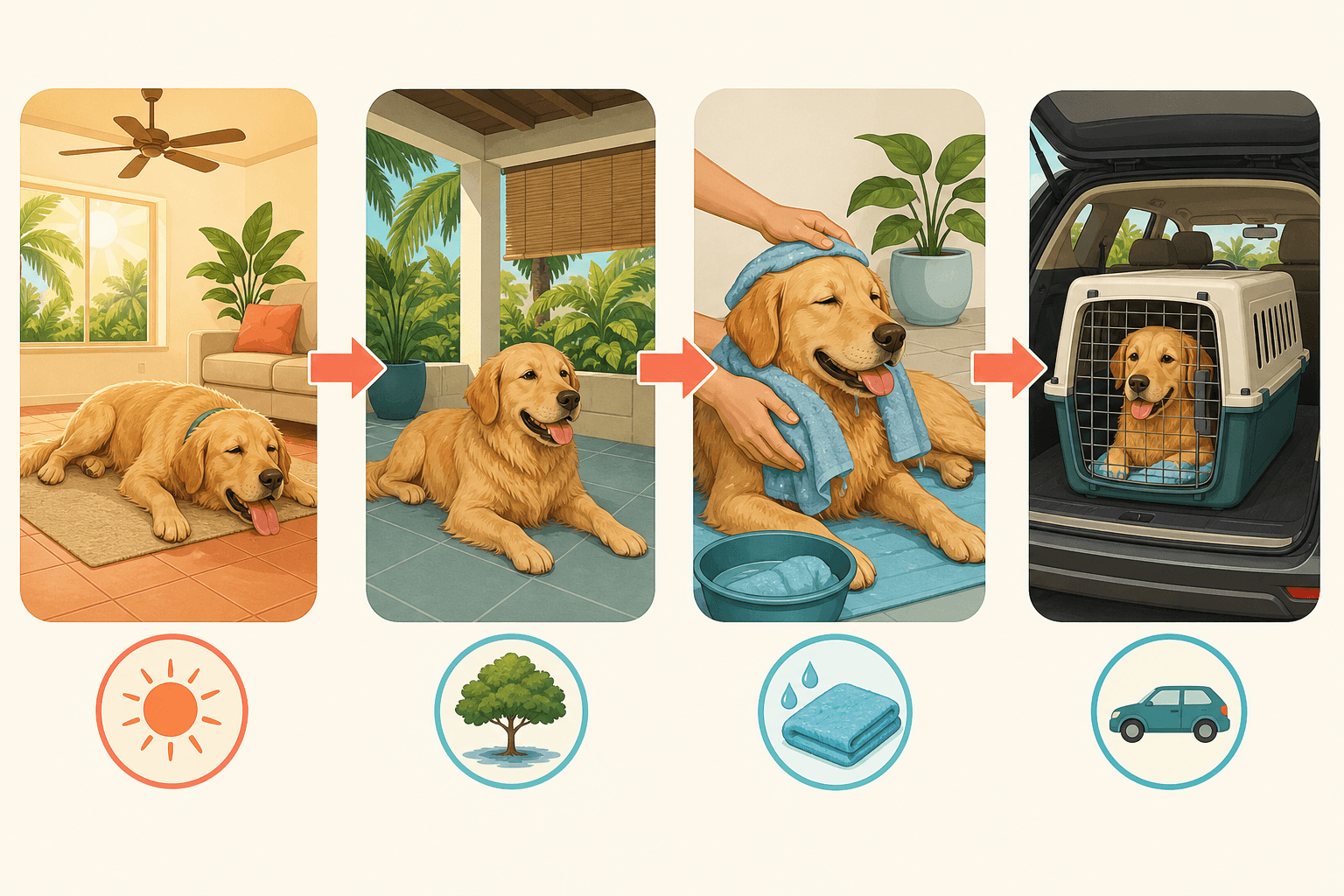
Your kit should make heat response easier: a rectal digital thermometer, towels that can be wetted with cool water, a collapsible water bowl, and your clinic transport details. The RSPCA heatstroke advice says to move the dog to a cool area, use cool water, offer small amounts of water, and seek veterinary help urgently. VCA describes heatstroke as an emergency where rapid cooling and veterinary treatment matter.
| Situation | First move | Next move |
|---|---|---|
| Panting hard after heat exposure | Move to a cool area | Call the vet or emergency clinic |
| Warm, weak, or struggling after car or lift delay | Start cooling with cool water on towels | Prepare transport |
| Heat signs plus collapse or breathing trouble | Cool while arranging transport | Go for urgent veterinary care |
Do not wait for a long walk to "count" as heat exposure. Tropical homes, cars, corridors, stairwells, and balconies can all be part of the problem.
Make poison response boring and fast
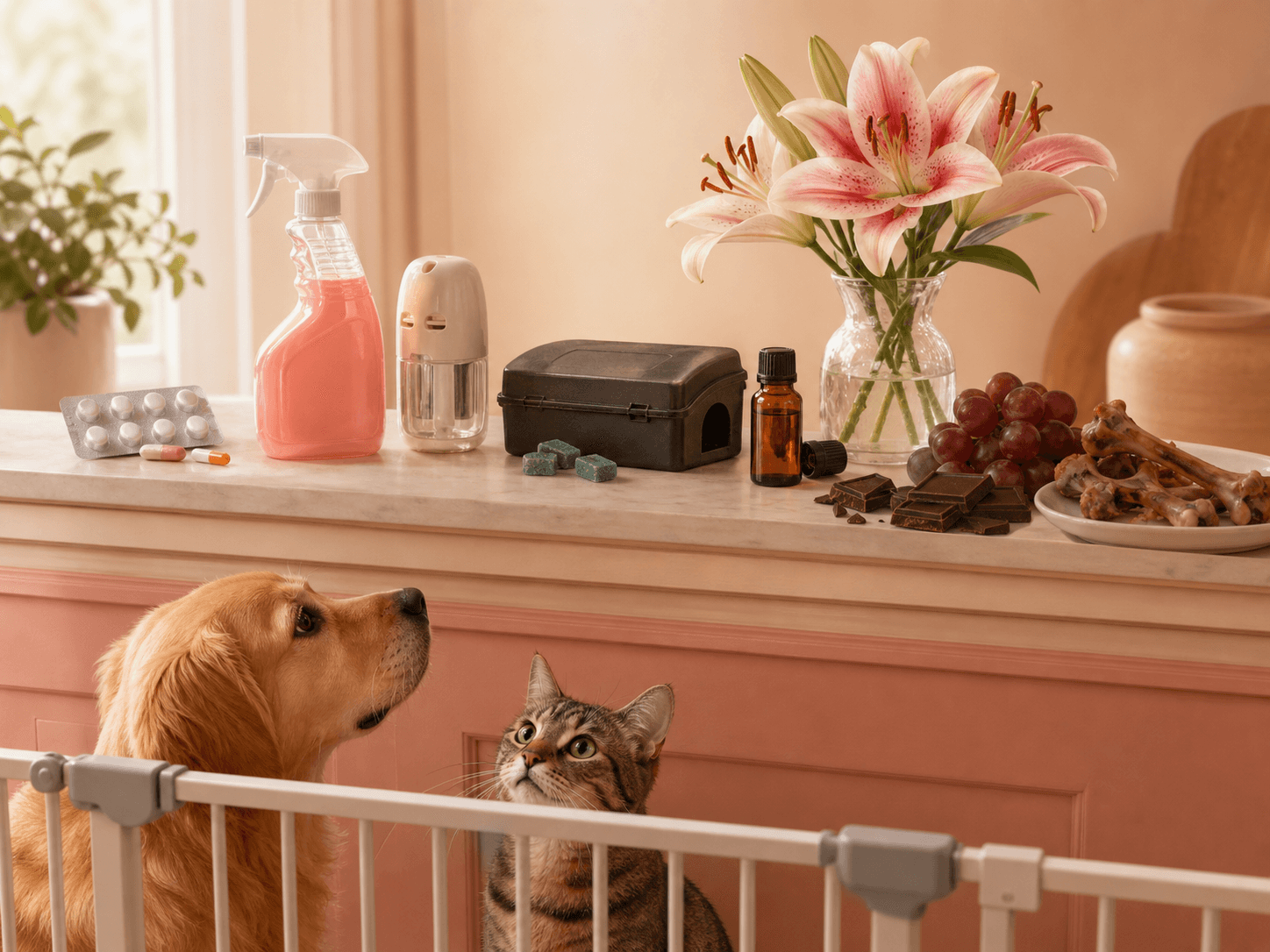
A poison section is mostly information. That is the point. When a cat chews a lily leaf or a dog cracks open a rodent bait station, the first win is rapid identification and a fast call.
Keep these items together: your veterinarian's number, the nearest emergency clinic, local poison guidance contacts where available, your pet's current medications, and packaging from any suspected toxin. The ASPCA Animal Poison Control guidance stresses collecting details about the substance when seeking help. Pet Poison Helpline advises contacting a veterinarian or poison helpline and not giving home remedies or inducing vomiting without professional direction.
| Hazard to flag at home | Why it belongs on the checklist |
|---|---|
| Human medications | Many are unsafe for cats or dogs |
| Household cleaners | Exposure details help the clinic advise |
| Insecticides and mosquito-control products | Common in tropical homes |
| Rodent bait | Needs quick identification and vet contact |
| Essential oils | Can be risky, especially with cats |
| Lilies | Dangerous for cats |
| Chocolate, xylitol, grapes or raisins | Known food hazards for pets |
| Cooked bones | Can cause injury or obstruction concerns |
The FDA list of potentially dangerous items covers household foods, medications, and chemicals that can harm pets. Cats Protection specifically flags lilies and other dangerous plants for cats.
What changed here is the old kitchen response. Many owners grew up hearing "make them vomit" as a quick fix. That is no longer a safe default. Identify the substance, keep the packaging, call, and follow professional instructions.
Pack for wounds, restraint, and transport
For wounds, your kit is for pressure, covering, preventing licking, and transport. It is not for turning the dining table into a treatment room.
For bleeding, use clean gauze or cloth and apply direct pressure. VCA's bleeding first-aid guidance supports direct pressure with clean material and veterinary attention for significant bleeding. Blue Cross first-aid advice also points owners toward dressings and veterinary help, without delaying care.
Do not apply human antiseptics or ointments unless directed. Deep wounds, bites, burns, punctures, and bleeding that does not stop quickly need veterinary assessment.
Restraint is part of first aid because pain changes behaviour. A sweet Labrador may snap. A familiar cat may scratch through panic. The AVMA handling guidance notes that injured pets may bite or scratch and recommends careful handling and transport.
Pack a towel or blanket, a spare leash or slip lead, and a secure carrier for cats. International Cat Care recommends an appropriate secure carrier and calm handling when taking a cat to the vet. A dog muzzle belongs in some kits, but only for a dog with normal breathing and low vomiting risk. Never muzzle a pet that is struggling to breathe or likely to vomit.
Keep medicines out unless your vet approved them
The medicine section should be small and specific. If your veterinarian has approved a medication for your pet, label it with the pet's name, dose, and expiry date.
Do not stock human painkillers for casual use. Paracetamol or acetaminophen, ibuprofen, aspirin, and naproxen can be toxic to cats or dogs without veterinary instruction. The MSD Veterinary Manual covers NSAID toxicosis in animals, and Vets Now explains that paracetamol poisoning in cats needs urgent veterinary treatment.
Maintenance is the small thing, done quarterly. Check expiry dates. Replace opened sterile dressings. Refresh saline and gloves. Update clinic contacts. Keep the box away from heat, humidity, children, and pets. The American Red Cross recommends keeping pet first-aid supplies together and accessible, including records and emergency contacts. Humane Society disaster preparedness guidance also supports keeping supplies, records, medications, and contact details ready for quick evacuation or emergency response.
Tonight, put one container together and write one emergency card: your vet, your nearest emergency clinic, your pet's medications, and the fastest transport plan.
— Manja